🏆 Customer Success Story
From 100K Emails to Zero Chaos: A University Innovates AP
The Auditoria Impact
emails automated annually
service disruptions while short-staffed by 25%
reduction in invoice processing time
of inbox to ERP workload automated, reducing manual triage and helping the team stay on top of volume
Company info
At one of the nation’s largest public universities, the accounts payable team was running a process that belonged to a different era. Each month, the team processed more than 5,800 invoices, alongside vendor inquiries that have to be reviewed, triaged, and resolved manually. That meant handling about 100,000 emails a year, with peak periods reaching roughly 10,000 emails a month, with ~90% of incoming emails being invoice submissions. “We were constantly monitoring the inbox, reading through emails, and trying to figure out what each one needed,” the AP manager explained. “It was hard to keep staff morale up and motivated because it’s like, okay, you get through 100 invoices in a day. The next day, you’re there again. There was no catching up; you’re always in the same cycle.” At that scale, even small inefficiencies created a disproportionate burden, with incredibly manual routing and limited visibility into response times. The result was a growing operational bottleneck. Before Auditoria, invoice turnaround was about 14 business days. Response times lagged, frustration increased, and the risk of errors, missed messages, or duplicate processing became more pronounced. The AP manager was unable to look ahead and be strategic. “I was in the trenches. I was processing along with my team, so I didn’t have much time to really do any type of analysis.” The university needed a way to reduce dependency on manual triage while improving responsiveness and control. There was hesitancy at first. Everyone hears AI and thinks it’s coming for their job. But once the team saw Auditoria handling the tedious, repetitive work they’d been drowning in, that mindset completely changed. I kind of wish we had it a little bit earlier. – AP Manager
Once bitten, twice shy
The university had tried to solve this problem before. A prior engagement with a consulting firm to build a custom AI-powered invoice processing solution had failed. The technology was built on older approaches, struggled with PO-to-invoice matching, and never delivered on its promise. The project was shut down.
That experience left the team cautious. When a senior leader first saw Auditoria’s presentation at Workday Rising, she was intrigued, but it took months of demos, questions, and investigation before she was willing to move forward.
“Having had a poor experience the first time, you really need to understand what your current process is and do the best due diligence you can,” she explained. “Vendors are going to sell up what they can do. But if you can talk to another customer who implemented them, that’s how you really know.”
From chaos to clarity
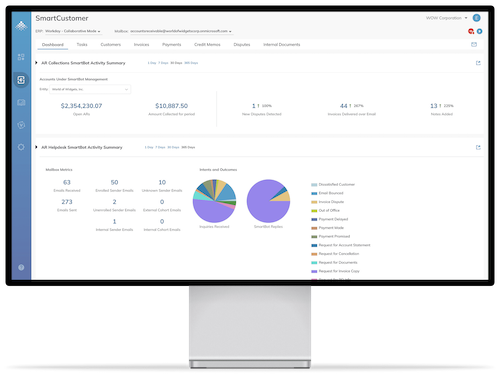
The university deployed Auditoria AP Helpdesk, and the impact was felt almost immediately. On day one, more than 500 emails flowed through the system, higher than anyone expected.
But the real transformation wasn’t just speed. It was visibility.
For the first time, the team could see exactly how many emails they were receiving, what types they were, and how work was distributed across the team. Data that had previously been estimated by counting files in folders was now available in real time.
“When we saw data in Auditoria, it was like, wow, we’re getting this many. And then to drill it down by day, by month, those numbers kind of blew me away because I really did not expect them to be so high.”
Invoice turnaround dropped from 14 business days to 7. Time per invoice fell from close to 10 minutes to under 5. And roughly 75% of workload distribution — from intake through queue assignment — now happens automatically between Auditoria and Workday.
It was hard to keep staff morale up when you get through 100 invoices in a day, and the next morning the queue looks the same. There was no catching up. Auditoria broke that cycle with powerful automation. My team is down two people right now, and we’re still keeping up.
– AP Manager
Redefining the role of accounts payable
With automation handling a large share of inbound inquiries, the nature of the work began to change. Instead of reacting to incoming emails throughout the day, the team could operate more proactively. Their focus shifted toward managing exceptions, improving processes, and supporting broader finance initiatives. For the leadership, that also meant stepping back from daily processing and spending more time managing, analyzing, and redistributing workload across the team.
“Prior to Auditoria, I didn’t have the time to be a manager. Now, because my hands are not in processing every single day, I have the benefit of stepping back, analyzing everything, and figuring out how to continue to optimize.”
This transition also had a positive impact on team morale. Removing repetitive, manual tasks reduced frustration and created space for more meaningful work.
At the same time, the introduction of AI prompted important conversations around change management and trust. According to the team: “Once people started seeing the results, it became less about the technology and more about how we could actually use it.”
The unsung heroes, finally heard
For years, the AP team operated in the background, acknowledged only when something went wrong. The transformation hasn’t just improved their metrics. It’s changed how other departments see them.
The senior leader who championed the project sees this as just the beginning. “It’s kind of brought to light what our old process was. And it made departments realize, oh, so sorry we put you guys through all of that.”
The university is exploring AI capabilities now across finance and HR, and the AP team’s success has become a proof point for what’s possible. And for the AP manager, the win is more personal: “It was just me trying to give my team what I would have wanted.”
We’ve improved AP dramatically in the last two years, and Auditoria has been central to that. It’s the first AI solution in our finance area that I would actually brag about. Now we’re looking at what else we can automate across finance and HR. This was just the catalyst.
– Executive Director
Advice to peers
For institutions facing similar challenges, the lesson is clear: addressing the root cause of inefficiency requires more than incremental change. It requires rethinking how work is done.
First, don’t be afraid of AI. “It’s taking those tedious, small, minute tasks that can end up taking 3 to 4 hours of your day and just handing that over. So then you’re freeing up time to do more valuable work.”
Second, do your homework. Talk to existing customers. Get hands-on with the product before you commit. And understand your own process deeply enough to ask the hard questions.
“I wish we had this earlier,” the AP manager said. “We can’t really get away from AI. We’re going to have to embrace it.”