🏆 Customer Success Story | Boddie-Noell Enterprises
Four people, 330 locations:
How Boddie-Noell finally made AP scale
The largest Hardee’s franchise operator in the U.S. transformed accounts payable with AI — cutting processing time 80% while a team of four handles 3,500 invoices a month.
The Auditoria Impact
Faster processing for invoices handled through Auditoria
reduction in error rates
invoices per month, streamlined through a small, centralized AP team
Line-level visibility unlocked, improving accuracy, reporting, and month-end clarity
Company info
At Boddie-Noell Enterprises, scale shows up in the details. As the largest Hardee’s franchise operator in the United States, the business runs more than 330 locations, each with its own suppliers, cost centers, and approval structures. All of it is supported by a centralized accounts
payable team of just four people.
Each month, they process roughly 3,500 invoices through their inbox, alongside hundreds of thousands of invoices flowing through other channels annually. Most of those invoices don’t have purchase orders, which changes everything. Without POs, every invoice must be interpreted before it can be processed. Vendor, spend category, cost center, approval routing. Nothing is predefined.
“The biggest challenge was handling a high volume of invoices,” said Brian Phillips, Corporate Controller. “Many of them were straightforward but still required manual keying. It wasn’t the best use of our team’s time or skills.”
Even simple invoices took five to six minutes. Others took ten minutes of research. Some stretched into a full day of back-and-forth across departments. The team kept things moving. But it depended heavily on experience, memory, and manual effort.
When scale exposes the limits of manual work
At this level, small inefficiencies don’t stay small. Manual entry introduced errors in invoice numbers and dates. Coding could shift after the fact if departments changed direction. And with more than 330 cost centers, even experienced staff had to rely heavily on institutional knowledge to
get it right.
“We would constantly run into an issue of maybe the date was entered incorrectly, or the invoice number was entered incorrectly, so it wouldn’t flag for a duplicate,” said Sarah Stamper, AP Team Lead.
The result was an error rate of roughly 3–4%. Not alarming on paper, but significant in practice. Onboarding new staff compounded the problem as every new hire had to learn how different vendors mapped to spend categories and cost centers, knowledge that lived in people’s heads, not in the system.
Why traditional solutions fell short
When Boddie-Noell began evaluating solutions in 2023, the requirement was clear: automate invoice processing without introducing more risk.
Workday’s built-in AP solution requires invoices to be matched to purchase orders. “Since most of our invoices don’t have POs, that approach just wasn’t going to work,” Phillips said.
Other tools relied on rigid rules, assigning fixed cost centers or categories by vendor. That would have reduced manual entry but increased errors, exactly the kind of errors the team was trying to eliminate. What Boddie-Noell needed was not just OCR. It needed a system that could interpret
invoices and make decisions.
“What we were looking for required AI,” Phillips said. “It needed to not only read the invoice but also make interpretive decisions about what was on the invoice and then what that meant for how we would want to report it.”
Building it properly the first time
Auditoria stood out not just for what it could do, but how it worked with the team. Implementation took around six months, remarkable for the amount of complexity. And the team deliberately pushed the system with real scenarios, edge cases, and high volumes before scaling.
“Auditoria stood out because when we’d ask, ‘Can it handle this?’ the answer was almost always yes. And if not, the team would take feedback, work with their engineers, and often come back with a solution that worked for us,” added Phillips.
From effort to consistency
The biggest shift wasn’t speed. It was consistency. For invoices processed through Auditoria, time has been reduced by roughly 80%. At the same time, the system catches issues automatically.
“It’s caught duplicates. It’s caught date issues. Pretty much anything that we’ve missed ourselves,” Stamper said.
Error rates dropped from 3-4% to closer to 2%. And for the first time, the team is capturing detailed, line-level data without adding effort. What used to be grouped on a single line is now automatically broken out, making month-end far easier to manage.
The AP Helpdesk product has extended those gains into vendor relationships as well. “Our AP Helpdesk product responds automatically to vendor inquiries, saving my team time while improving vendor relationships. It’s valuable work for the vendor, but it used to be time-consuming for us. Now
it’s handled seamlessly,” Phillips said.
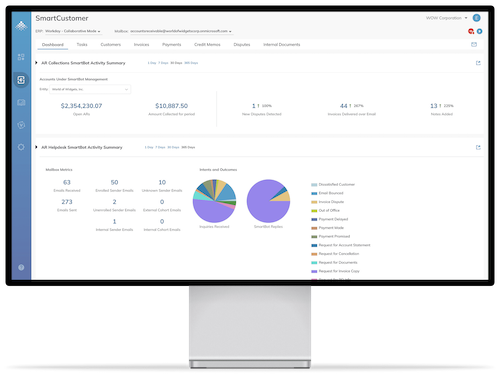
The team also gained access to real-time performance metrics through Auditoria’s dashboard and is now tracking invoice volumes and processing times in ways that weren’t previously possible.
Since implementing Auditoria, “We’ve seen staff shift toward more value-added work, an increase in our ability to capture discounts, and overall greater consistency,” Phillips noted. Automation has not replaced the team. It has, instead, made their work more valuable.
A foundation for what comes next
For Boddie-Noell, this is not a one-off improvement. It’s a foundation. AI is already being explored across the business, from restaurant operations to internal support tools. Within finance, the focus is on continuing to build a more predictable, data-driven operation.
“The potential is tremendous, from error and anomaly detection to more consistent reporting and even enhanced audit analytics. AI doesn’t get tired; it can review massive data sets and surface patterns humans might miss. As it learns, it keeps finding insights we didn’t know how to identify before,” Phillips said.
When asked to name the single biggest benefit of working with Auditoria, his answer was clear: “Consistency. In reporting, in processing, and in results. It’s helped us build a more reliable, scalable AP operation. Auditoria is a coworker. It’s really part of our team and it can process all day without ever getting tired.”
We didn’t just need software that could read an invoice — we needed something that could think about it. What vendor is this? What kind of spend is it? Which cost center should it hit? Before Auditoria, all of that lived in people’s heads. Now it lives in a system that gets smarter every day and never loses institutional knowledge when someone walks out the door.
– Brian Phillips, Corporate Controller, Boddie-Noell Enterprises
Advice to peers
For organizations facing similar complexity, the lesson from Boddie-Noell is clear: start with your process, not the technology. Know your non-negotiables, and don’t compromise on them.
“Really take the time to plan and, more than anything else, go into it knowing what your needs are, where your priorities are,” Phillips said. “If there’s a non-negotiable on it and a solution doesn’t meet that need, that’s not the solution for you, even if there isn’t a better one at the time.”
It also means being honest about the challenges. Engaging openly with a partner, rather than trying to fit into a predefined solution, creates space for better outcomes and often leads to improvements that go beyond the initial scope.
There is also a practical reality. The upfront investment in testing, refinement, and change management cannot be skipped. The more scenarios a system is exposed to early on, the more reliable and valuable it becomes over time.