🏆 Customer Success Story | Bluberi
Bluberi bets big on AP automation, hits the finance transformation jackpot
The Auditoria Impact
missed payments and duplicates, with a full audit trail.
of the AP team’s labor was redirected from invoice processing, freeing the team for higher-value work.
of AP Manager time freed for oversight, reconciliation, and strategic finance work.
Company info
Bluberi Gaming has been making slot machines for 30 years. For most of that time, it operated as a small, independent developer in an industry dominated by much larger players. Then came a breakout game, a surge in demand, private equity investment, and the kind of rapid growth that exposes every crack in a back-office operation.
The AP function was not ready for what the business was becoming.
When Kyle Burton joined as Senior Director, Controller in early 2025, invoices were being processed entirely by hand in NetSuite. There was no OCR tool, no dedicated AP inbox, and no way to track what was outstanding. A company-wide distribution list would notify the entire accounting team when an invoice arrived. Things got missed, emails got deleted, and vendors threatened to cut off supply.
“There was no way to track accounts payable. The inbox could be filled with inquiries, not just invoices, so there was really no easy way to quantify what was out there,” said Kyle Burton, Senior Director, Controller at Bluberi. “We’d have fire drills constantly, because someone had missed manually processing an invoice in NetSuite or accidentally deleted the email.”
The error rate reflected the chaos. Between three and ten duplicate payments or missed late fees were slipping through every month, not from any deliberate oversight, but because invoices were simply getting lost.
With a Nevada Gaming Commission license secured in early 2026 and the prospect of going public on the horizon, the gap between where the AP function was and where it needed to be had become impossible to ignore.
Building a future-proof business
Bluberi’s leadership had already developed an appetite for technology investment. The decision to bring in Auditoria predated a broader company-wide AI initiative and reflected a deliberate strategy to build the operational infrastructure that a fast-growing, PE-backed gaming company would need.
The criteria were straightforward: an OCR tool capable of accurately capturing invoice data, and an inbox management solution that could bring order to the flood of vendor correspondence consuming the team’s time.
“At the time, it was so chaotic, I’d say a full-time job was just answering emails,” said Burton. “Having the ability to respond directly within the system was a critical part of what we needed.”
Implementation and the technical configuration itself were smooth.
It went really well in general, and the partnership with the Auditoria team was exceptional. This would never have happened with a typical enterprise ERP implementation; there was always someone to help, and there was visibility across all levels of the implementation with the Auditoria team.
– Kyle Burton, Senior Director, Controller, Bluberi
What agentic AI actually changed
The shift from fully manual processing to Auditoria’s agentic AP platform changed the nature of the work, not just the speed of it.
Where invoices had previously required human judgment at every step, from reading the document to identifying the vendor, selecting the GL code, and entering the data into NetSuite, Auditoria’s AI agents now handle the heavy lifting. The system reads each invoice, pulls historical coding patterns, captures amounts, maps vendors, and routes for approval, all without manual intervention. When the system encounters something it cannot resolve, it surfaces the exception clearly, so the team’s attention is focused exactly where it needs to be.
With approximately 60% of invoices arriving against purchase orders and the remaining 40% requiring interpretive coding decisions without a PO to match against, the platform needed to handle both scenarios reliably. Auditoria’s AI agents do exactly that, reading each invoice, pulling historical coding patterns, capturing amounts, mapping vendors, and routing for approval across both invoice types.
“The OCR is picking up all that data for us, including the history of the coding. We’re able to just reach out to the individual approver, and it alleviates all that error,” said Chris Maples, Accounts Payable Manager at Bluberi. “It is shortening processing time by around five minutes per invoice. Add that up over time, and it allows us to focus on other areas during the day.”
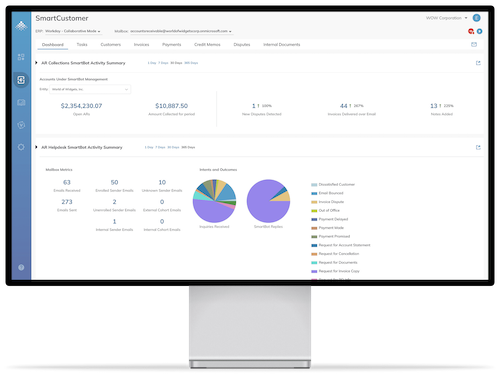
The AP Helpdesk has had an equally significant impact on vendor correspondence. Inquiries that previously sat unactioned in a shared inbox are now routed, prioritized, and in many cases responded to, dramatically reducing the volume of manual email handling that had been consuming the team’s capacity.
Audit trail quality improved, too. For a business preparing for potential public company status, that matters.
We’re able to see where things went wrong, whereas in the past, everything went directly into NetSuite and you couldn’t trace it back. Now we can see whether a record was processed correctly in Auditoria, and whether someone then went into NetSuite and changed it. It allows us to be more accurate and more efficient.
– Chris Maples, Accounts Payable Manager, Bluberi
Fewer people, the same volume, and a cleaner close
Since going live, the AP team has moved from 2-3 people to effectively one and a half, with one dedicated AP officer working in the system daily and Maples stepping in only during peak periods.
Additionally, the nature of the work has shifted materially. Across the team, between 20 and 30% of time previously spent processing invoices has been redirected toward reconciliation, statement review, vendor communication, and reporting.
Visibility, which had been essentially nonexistent before, is now a daily operational tool. The AP officer sends three volume updates every day using data pulled directly from Auditoria, giving Burton and the CFO a real-time picture of what is open, what is pending, and what needs attention before close.
“Auditoria’s agentic AI helps us with closing the books. We can run a report of what’s pending in NetSuite. Unprocessed invoices can really open a company up to errors in their reporting, so having that data readily available is genuinely valuable,” said Burton. “And it helps us talk to the CFO with statistics, which is exactly what a data-oriented team needs.”
Out-of-cycle emergency payments, which had been a regular occurrence when invoices went missing, are also down.
The road to autonomous
“Getting a bigger chunk of our suppliers onto autonomous mode will be a huge win, especially for the senior leadership team. They’ll see that we’ve effectively leveraged technology to free up hours to spend on other things, as there’s no shortage of work as we grow,” said Burton.
Beyond AP, the team is looking at AI-assisted tools for collections and AR analytics and is actively exploring how Auditoria’s evolving platform can support those needs as the business scales.
For others in similar roles, the advice from both Burton and Maples is the same: start earlier than you think you need to, stay open to changing your processes rather than replicating them in a new system, and choose solutions that integrate directly with your ERP rather than requiring manual data transfers.
“You have to be open to AI. The sooner you learn to leverage it, the better you’ll be in the end,” said Maples.